







Search Results for: Specialty Green Beans
The Definition of Specialty Coffee and Its Evaluation Criteria: A Complete Guide from Green Bean Origin to Extraction
The concept of specialty coffee has undergone more than thirty years of development since it was first proposed by Erna Knutsen in 1974. Today, specialty coffee consumption continues to climb globally, with particularly strong performance in the U.S. market. However, understanding specialty coffee cannot stop at the level of "coffee beans grown in special environments." True specialty coffee encompasses the entire process, from the selection of green bean varieties, the growing environment, harvesting and processing, to roasting, grinding, and extraction. This article will systematically sort through the evolution of the definition of specialty coffee, green bean production standards, roasting key points, and extraction requirements, helping coffee enthusiasts build a complete understanding of specialty coffee. [more…]
A Detailed Explanation of the SCAA Specialty Coffee Green Bean Defect Grading and Scoring Standards: A Comprehensive Analysis from Defects to Cupping Performance
Before green coffee beans reach our hands, they often go through many stages, during which defects are almost unavoidable. Some defects are obvious at the green bean stage, yet once roasted they may be cleverly concealed. The SCAA (Specialty Coffee Association of America) has established strict grading standards for specialty Arabica coffee, covering multiple dimensions such as defect types, moisture content, aroma, and bean size. This article will systematically sort out the SCAA's defect classification rules and scoring requirements, explain in detail the causes of various defective beans and their impact on cupping flavor, and help enthusiasts develop a keen eye for identifying specialty coffee. At the same time, the article retains relevant recommendations from the Front Street brand for readers' reference. [more…]
In-House Roasting Café Green Bean Sourcing and Inventory Management in Practice: Cost Control, Partnership Strategies, and Espresso Blend Bean Selection Guide
For a coffee shop that roasts its own beans, having the roaster in place is only the starting point; what truly determines the quality of the final product is the quality of the green beans and the roasting craft. Green bean costs often account for a significant proportion of initial operating expenses, so how to choose the right items, control inventory, maintain stable supply, and leverage peer cooperation to lower the threshold for acquiring specialty beans is a challenge every operator must face. Starting from the cost structure of green beans, this article sorts out the three major purchasing points for basic espresso blend beans, explores the value of establishing horizontal partnerships, offers practical suggestions for display and storage, and finally includes flavor descriptions of several Front Street espresso blend beans for coffee shops with different positioning to reference when selecting beans. [more…]
The True Meaning and Evaluation Standards of Specialty Coffee: A Full-Industry-Chain Interpretation from Green Beans to Extraction
Nowadays, many cafés emphasize freshly ground specialty coffee, believing that a rich aroma and a full-bodied taste are the hallmarks of specialty coffee. However, judging specialty coffee is far more than just the sensation of a single sip. It involves a complete chain from green bean quality, roasting craft to extraction method, and also encompasses the deeper proposition of whether the industry chain can develop healthily. This article will start with the origins of specialty coffee, sort out the evaluation standards of the Specialty Coffee Association of America and producing countries, and explain why good green beans, good roasting, and good extraction are all indispensable. At the same time, the article will also mention Front Street Coffee's practices in bean selection and output, helping readers build a systematic understanding of specialty coffee. [more…]
How Does the SCAA Define Specialty Coffee? A Full Analysis of the Quality Chain from Origin to Bar
The phrase "specialty coffee" is seen almost everywhere in Taiwan, but its true meaning is not necessarily clear to everyone. The definition given by the Specialty Coffee Association of America (SCAA) does not focus solely on green bean quality or brewing methods, but instead looks at the entire industry chain—from farmers, green bean traders, roasters, and baristas all the way to consumers, every link plays an indispensable role. This article will comprehensively sort out the SCAA's official interpretation of specialty coffee, guiding you to understand every person who quietly contributes along this quality chain, and also to rethink the true value behind a good cup of coffee. [more…]
NINETY PLUS Panama Geisha Coffee Beans Flavor Analysis and Specialty Recommendations
Geisha (Gesha) is not the name of a coffee drink, but a rare coffee variety originating from Ethiopia, now most renowned for the flavors produced in Panama and Colombia. This article provides an in-depth introduction to NINETY PLUS's original W2, N2, and H2 processing methods and its L5 to L95 green bean grading system, and describes in detail the flavor characteristics, recommended coffee-to-water ratios, and brewing key points of three Geisha coffees: W2-L21 Lycello, H2-L39 Juliette, and N2-L39 Perci Red. The article also shares Front Street Coffee's philosophy on recommending specialty coffee beans, making it suitable reading for coffee enthusiasts who want to gain a deeper understanding of the Geisha variety and high-end processing methods. [more…]
A Comprehensive Analysis of the Grading Systems and Flavor Profile Differences Between Mandheling and Geisha Coffee Beans
Those new to specialty coffee are often confused by labels such as G1 and AA on the packaging. These letters and numbers actually represent the grading systems for coffee beans from different origins. Some countries grade by bean size, others by the proportion of defective beans, and still others by growing altitude. Take Mandheling as an example: Indonesia uses the wet-hulling process and grades beans from G1 to G6 based on the number of defects in 300 grams of green coffee. Geisha coffee, by contrast, is famous for Hacienda La Esmeralda's red, green, and blue label system. This article will systematically sort through these grading systems while taking a deeper look at the core differences in flavor and mouthfeel between Mandheling and Geisha, helping coffee lovers understand the logic of quality evaluation in specialty coffee more clearly. [more…]
Colombian Coffee Brand Roundup: A Complete Analysis of Flavors and Grading from Don Juan to the Huila Specialty Region
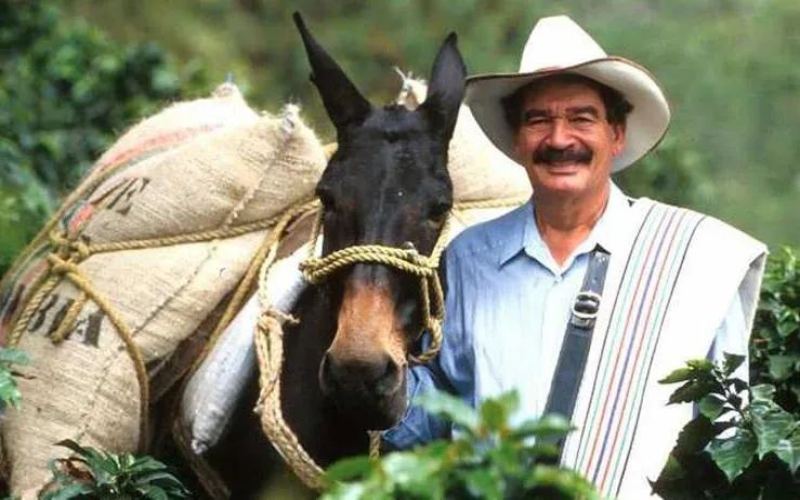
For coffee enthusiasts, Colombia is always an unavoidable classic origin. This article begins with the household-recognized brand image of Juan Valdez, systematically outlining Colombia's coffee-growing regions, climate characteristics, harvest seasons, and the landscape of specialty production areas, while offering an in-depth interpretation of why Huila Department has become the specialty region that Front Street Coffee selects as Colombia's flagship representative. The article also provides a detailed introduction to Colombia's green bean screen-size grading standards—the specific meanings of export grades such as UGQ, EP, and Supremo, along with their screen mesh specifications—as well as the practical application of the washed processing method in the Huila region. Finally, using Huila coffee beans as an example, Front Street fully demonstrates the extraction steps for a moka pot, offering a reference for daily brewing. [more…]

Green Coffee Packaging, Storage Conditions, and Seasonality: A Full Analysis of Jute Bags, Vacuum Bags, GrainPro Bags, and Freezing Methods
The quality of green coffee beans depends not only on origin and processing method; their packaging and storage methods are equally crucial. From the most common jute bags to vacuum bags, grain bags, and even frozen storage, different packaging methods vary significantly in their protective effect on green beans and their cost. Over the past decade, specialty roasters have driven innovation in packaging and transportation methods, using faster and more scientific approaches to lock in the freshness of green beans. This article will systematically review the advantages and disadvantages of commonly used packaging, the requirements of the storage environment, and explore the concept of "seasonality," which has attracted much attention in recent years. Whether you are a roaster or a coffee enthusiast, understanding this knowledge can help you better judge and preserve coffee beans. [more…]

Tracing the Origins of Panama's BOP Competition: Hacienda La Esmeralda Geisha Red, Green, and Blue Label Grades and Their Brewing Flavor Analysis
The Panama BOP (Best of Panama) is the world's first green coffee competition. Since its inception in 1996, it has profoundly advanced the development of specialty coffee, and Hacienda La Esmeralda's Geisha shot to fame in 2004. Hacienda La Esmeralda meticulously grades its Geisha by altitude and plot, forming a three-tier system of Red Label, Green Label, and Blue Label. This article systematically reviews the origins of the BOP competition and auction, the history and plot divisions of Hacienda La Esmeralda, analyzes in detail the definitional differences between Red Label, Green Label, and Blue Label, and includes Front Street Coffee's brewing parameter recommendations and flavor descriptions, providing coffee lovers with a complete guide to Geisha knowledge. [more…]
Does green coffee also value freshness? Analyzing the close relationship between green bean shelf life and flavor changes
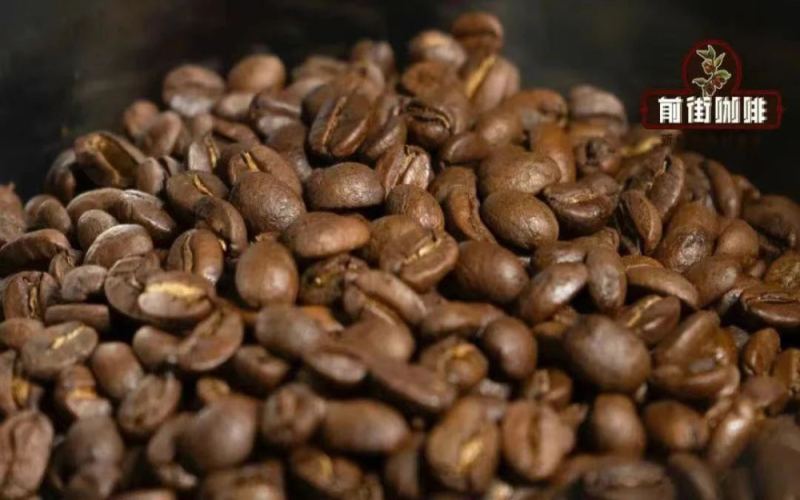
In the vast world of specialty coffee, the variables that influence flavor go far beyond origin and processing method. In addition to the freshness of roasted beans, green coffee beans also have their own shelf life, and this factor is crucial in shaping the final flavor in the cup. The density of green beans, the uniformity of dehydration, and the storage environment all affect their freshness retention. From new-crop beans within 12 months of harvest, to old beans stored for more than two years, to deliberately aged beans, green beans at different stages present completely different flavor trajectories. Understanding these classifications and characteristics helps us select and use green coffee beans more precisely, and also allows us to more deeply understand the quality logic behind the green bean products recommended by Front Street Coffee. [more…]
Full Analysis of the Panama BOP Competition: Differences and Brewing of Hacienda La Esmeralda Geisha Red, Green, and Blue Label Coffee Beans
The Best of Panama (BOP) is the world's first green coffee competition, using blind cupping to conduct sensory evaluation of Panamanian specialty coffee, and it has greatly promoted the specialty cultivation of Panamanian coffee. This article begins with the history of the BOP auction and provides a detailed introduction to the Geisha legend of Hacienda La Esmeralda, including the grading criteria for Red Label, Green Label, and Blue Label, their plot origins, processing methods, and flavor differences, along with Front Street Coffee's brewing parameter recommendations to help coffee enthusiasts gain a comprehensive understanding of the origins and evolution of this top-tier Geisha. [more…]
A Detailed Explanation of Green Coffee Bean Grading Standards: What's Behind Ethiopia G1, Kenya AA, Blue Mountain No.1, and SHB Grades?
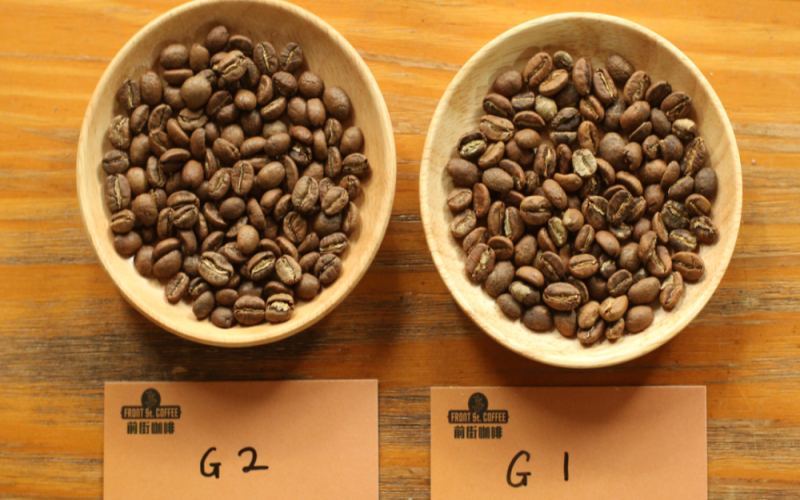
Coffee enthusiasts often ask in the shop exactly what the difference is between Ethiopia's G1 and G2, what Kenya AA actually means, and what Costa Rica's SHB grade signifies. These combinations of letters and numbers actually reflect how each producing country evaluates the quality of green coffee beans. Due to differences in history, trade, climate, and terrain, different origins have developed their own grading systems, with evaluation criteria covering multiple dimensions such as defect percentage, bean size, growing altitude, green bean density, and processing method. This article will systematically sort out the origins of coffee grading and introduce, one by one, the green bean grade standards of representative producing countries such as Ethiopia, Kenya, Colombia, Jamaica, Costa Rica, Panama, Guatemala, El Salvador, Honduras, and Brazil. [more…]
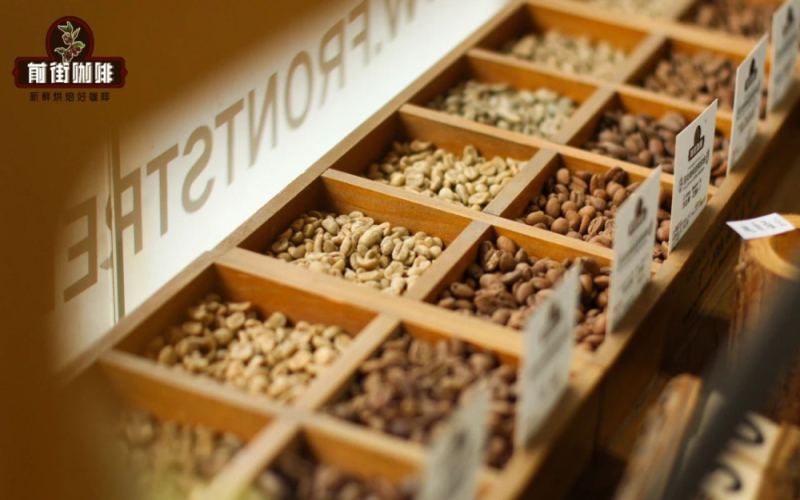
How Are Green Coffee Beans Graded? A Full Breakdown from Ethiopia G1 to Kenya AA and Blue Mountain No. 1
Friends who frequently buy coffee beans have surely seen labels like Yirgacheffe G2 and Kenya AA. These letters and numbers actually represent the grade of green coffee beans. Since each coffee-producing country has established different grading systems, the evaluation criteria also vary in emphasis—factors such as bean size, proportion of defective beans, growing altitude, bean hardness, and cupping score can all serve as the basis for grading. In this article, Front Street Coffee will walk you through the green bean grading rules of representative producing countries including Ethiopia, Kenya, Tanzania, various Central and South American countries, Colombia, Brazil, and Jamaica, helping you understand the grade labels on packaging the next time you shop. [more…]
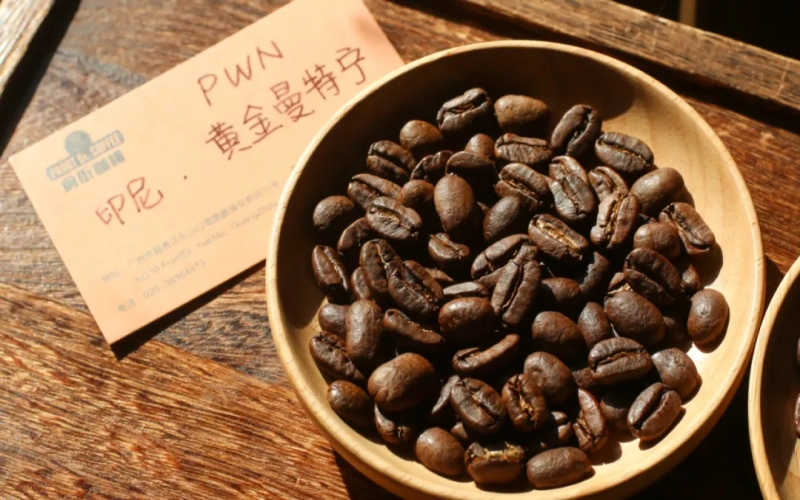
How to Choose Indonesian Specialty Mandheling? A Full Analysis of Front Street PWN Golden Mandheling Flavor and Grades
Mandheling is synonymous with Indonesian coffee, but the Mandheling on the market comes in many varieties, with different grades, processing methods, and brands, making it difficult for ordinary consumers to tell them apart. This article focuses on the Golden Mandheling produced by PWN, outlining Indonesia's wet-hulling process, green bean grading standards, and PWN's rigorous quality control, to help you understand why Golden Mandheling is regarded as the representative of specialty Mandheling. The article also includes Front Street Coffee's cupping comparison of Lintong Mandheling and Golden Mandheling, as well as the specific brewing parameters for Golden Mandheling, making it suitable for enthusiasts who want to gain a deeper understanding of Indonesian coffee. [more…]
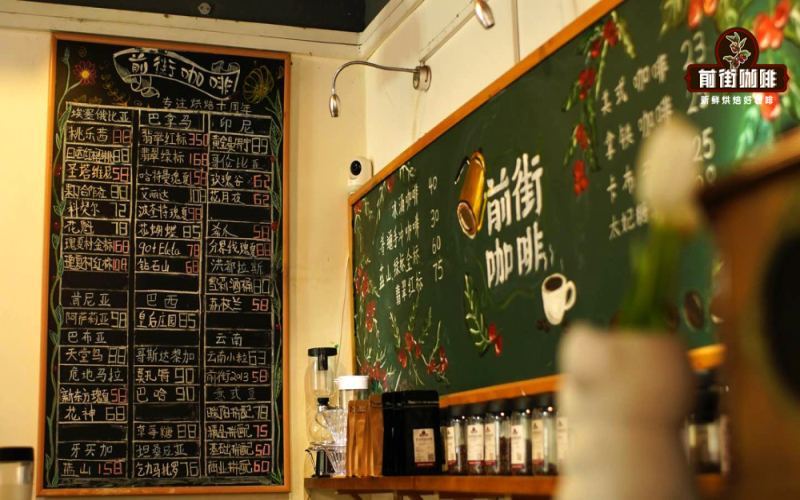
A Complete Guide to Coffee Bean Grading Standards: Meanings and Characteristics of Grades Such as G1, AA, AB, and SHB from Various Origins
When purchasing single-origin coffee beans, labels such as G1, AA, and SHB often appear on the packaging. What exactly do these letters and numbers represent? They are actually coffee bean grade symbols established by each origin based on its own conditions. Due to differences in growing environments and varieties, the grading criteria of different countries vary—some look at the number of defective beans, some at green bean size, and others at hardness or altitude. In this article, Front Street Coffee will sort out the grading standards of major producing regions such as Ethiopia, Kenya, Indonesia, Central and South America, and Brazil, helping coffee lovers understand the meaning behind these grades so they can more accurately select high-quality coffee beans that suit their own taste. [more…]
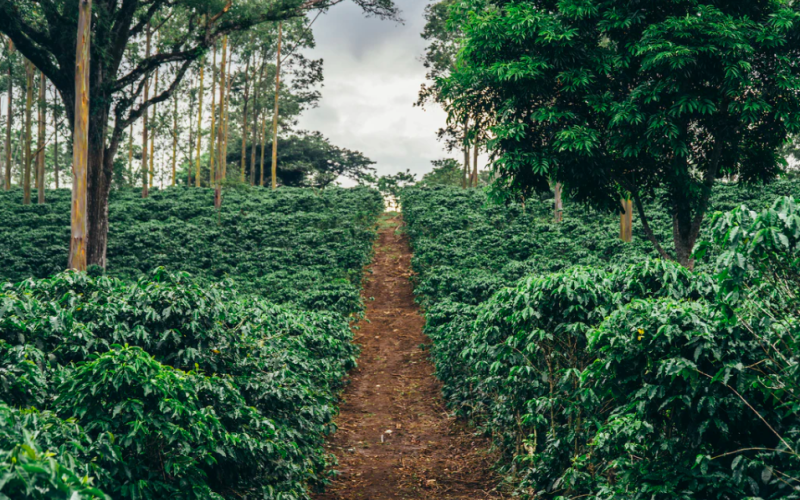
A Complete Guide to Colombian Supremo Specialty Green Coffee Beans: Origin Terroir, Grading Standards, and Pour-Over Techniques
Colombian coffee has long held an important position in the international market thanks to its mellow, fragrant aroma, with export volumes consistently ranking among the highest in the world. What exactly creates its outstanding quality? This article will systematically unpack the full picture of Colombian Supremo-grade green coffee beans from four dimensions: the terroir conditions of the Andes Mountains, the management role of FNC (the National Federation of Coffee Growers of Colombia), the green bean screen-size grading system, and specific brewing plans. At the same time, using a Huila region everyday drinking bean as an example, it shares Front Street's parameter thinking and flavor performance in actual extraction. [more…]
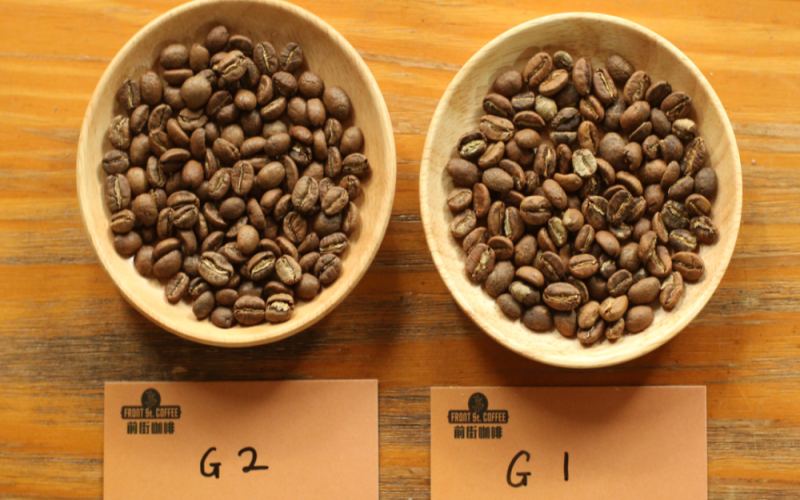
An Introduction to Green Coffee Bean Grades | A Comparison of Coffee Bean Characteristics, Flavor, and Taste Across National Green Coffee Bean Grading Systems: G1, G2, AA, PB, SHB
For more specialty coffee knowledge, please follow our WeChat official account: Front Street Coffee (FrontStreet Coffee). Many friends, while drinking coffee at Front Street, ask our baristas, "What is Yirgacheffe G1 and Yirgacheffe G2?" "What is Kenya AA, AB?" What is Guate... [more…]
From Origin to Variety, to Competitions and Estates: A Complete Guide to How Specialty Coffee Beans Are Named
Walking into Front Street Coffee (FrontStreet Coffee) and facing the names of dozens of coffee beans on the menu, many people wonder: Aren't Bach and Mozart musicians? How did they become coffee beans? In fact, there is a complete logic behind the naming of coffee beans. In the early days, coffee beans were mostly named after countries, regions, or ports. After entering the specialty coffee era, traceability information has become increasingly detailed. Estate names, green bean competition rankings, barista competition beans, variety names, processing methods, and even brand classifications can all become the name of a bean. This article will systematically sort out the various rules for naming coffee beans to help you no longer feel confused when ordering. [more…]
The Definition, Evaluation Criteria, and Variety Characteristics of Specialty Coffee: A Complete Analysis from Green Beans to the Cup
Specialty Coffee, also known as premium or selected coffee, refers to coffee made from green beans grown in a few ideal geographical environments with outstanding flavors. Starting from the definition of specialty coffee, this article reviews its origins and current status, explains in detail the evaluation standards of the Specialty Coffee Association of America and producing countries, analyzes the six major characteristics and drinking requirements of specialty coffee beans, and looks ahead at its market development trends. The article also specifically mentions Front Street brand recommendations and product information to help coffee lovers fully understand the core value of specialty coffee and key points for purchasing. [more…]